Pregnancy is an important period when the body goes through many physical and emotional changes.
Staying active can be a helpful part of a healthy pregnancy for many people, especially when the pregnancy is progressing normally and there are no medical reasons to avoid exercise.
Gentle movement can support everyday energy, mobility, muscle strength, posture, and overall well-being.
Exercise during pregnancy does not need to mean intense workouts or complicated equipment.
Simple activities performed at home, such as walking around the house, gentle stretching, pelvic floor exercises, and pregnancy-friendly strength movements, can provide useful ways to remain active while adapting to a changing body.
Current guidance recommends that healthy pregnant women generally aim for at least 150 minutes of moderate-intensity aerobic activity each week, although individual needs can vary.
Choosing the right pregnancy exercises at home is mainly about comfort, safety, and listening to the body rather than trying to achieve a particular fitness goal.
Pregnancy can make some familiar movements feel different, so exercises may need to be modified as the months progress.
A person who was already active before pregnancy may be able to continue many activities with appropriate adjustments, while someone who was not exercising regularly can usually begin with short, gentle sessions after discussing activity with a healthcare professional.
The purpose is not to push through discomfort but to maintain healthy movement in a way that feels manageable.
Regular moderate activity can support cardiovascular health and may also help reduce the risk of excessive weight gain and gestational diabetes.
Why Exercise During Pregnancy Can Be Helpful
Regular physical activity can provide several benefits during pregnancy when it is appropriate for the individual.
Moderate exercise helps keep the heart and lungs working efficiently and can support general physical fitness during a time when everyday activities may gradually become more demanding.
Staying active may also help with mobility and make it easier to maintain strength in the muscles used for daily tasks.
In addition, physical activity during pregnancy has been associated with a lower risk of gestational diabetes and excessive weight gain, while regular movement can also contribute to better mood and sleep.
These benefits do not mean that exercise guarantees a complication-free pregnancy, but they show why safe physical activity can be an important part of prenatal wellness.
Start With a Gentle Warm-Up
A warm-up can prepare the body for exercise by gradually increasing movement rather than going immediately from rest into activity.
At home, a warm-up can be simple and may include walking slowly around the room, moving the shoulders gently, making controlled arm movements, and performing comfortable ankle or leg movements.
The goal is not to become exhausted before the workout begins but to allow the body to transition into activity gradually.
Five to ten minutes of gentle movement may be enough for many people, although the appropriate amount can depend on fitness level, stage of pregnancy, and how the person feels that day.
If dizziness, unusual pain, significant shortness of breath, or another concerning symptom appears, exercise should be stopped and medical advice should be sought.
Walking Around the Home
Walking is one of the simplest forms of exercise because it requires little or no equipment and can easily be adjusted according to energy levels.
Someone who prefers to exercise indoors can walk through different rooms, walk in place, or use a safe hallway or open area.
The pace should remain comfortable enough that the person does not feel overwhelmed.
Walking can also be divided into shorter periods rather than completed in one long session.
For example, a person may choose several brief walks throughout the day when a longer workout feels uncomfortable.
Moderate-intensity activity can be spread across the week, and even smaller amounts of movement can be useful for someone who is unable to exercise for long periods at once.
Pelvic Floor Exercises
Pelvic floor exercises are another gentle option that can be performed at home.
The pelvic floor muscles help support organs in the lower part of the pelvis and play an important role in bladder control.
Pregnancy places additional demands on this area, so learning how to gently contract and relax these muscles can be useful.
A simple approach is to tighten the pelvic floor muscles gently as though trying to prevent passing urine, hold the contraction briefly, and then completely relax.
It is important not to repeatedly practice these exercises while actually urinating because that can interfere with normal bladder function.
Proper technique matters more than doing a large number of repetitions, and anyone who is unsure about the correct technique can ask a healthcare professional or pelvic health physiotherapist for guidance.
Gentle Squats
Squats can strengthen several muscles in the legs, hips, and lower body and can be adapted as pregnancy progresses.
At home, a pregnant person can stand near a sturdy chair or another stable support, place the feet comfortably apart, and slowly bend the knees while moving the hips backward as though preparing to sit.
The movement should remain controlled, and the person should avoid going deeper than feels comfortable.
The chair can provide additional stability if balance becomes more difficult.
As the abdomen grows, the stance and depth may need to change naturally.
The goal is gentle strengthening rather than forcing the body into a particular position.
Supported Wall Squats
A wall-supported squat can provide another way to work the lower body while giving the person additional stability.
Standing with the back supported against a wall, the person can slowly bend the knees a small amount and then return to a comfortable standing position.
There is no need to lower the body deeply.
This exercise can be especially useful for someone who prefers additional support while exercising at home.
The movement should remain smooth, and the knees should stay comfortable throughout.
If the exercise causes pain, pressure, dizziness, or another unusual sensation, it should be discontinued.
Standing Leg Lifts
Standing leg lifts can help maintain movement in the hips and legs without requiring the person to lie on the floor.
Holding onto a sturdy surface for balance, a pregnant person can gently move one leg to the side or slightly backward and then return it to the starting position.
The movement should be small and controlled rather than high or forceful. Alternating sides can provide a simple lower-body routine.
Good posture and steady breathing are more important than how far the leg moves.
As pregnancy progresses, balance may change, so using stable support becomes increasingly important.
Gentle Glute Bridges and Pregnancy-Friendly Alternatives
Some people may have used glute bridges before pregnancy, but exercises that require lying flat on the back may need modification as pregnancy progresses.
After the first trimester, guidance advises avoiding activities that require lying flat on the back for extended periods.
Instead of continuing a traditional floor-based bridge, a pregnant person can ask a healthcare professional about suitable standing or side-supported alternatives that work similar muscle groups.
The safest variation can depend on the individual, the stage of pregnancy, and any medical considerations, so there is no need to force a familiar exercise if it no longer feels comfortable.
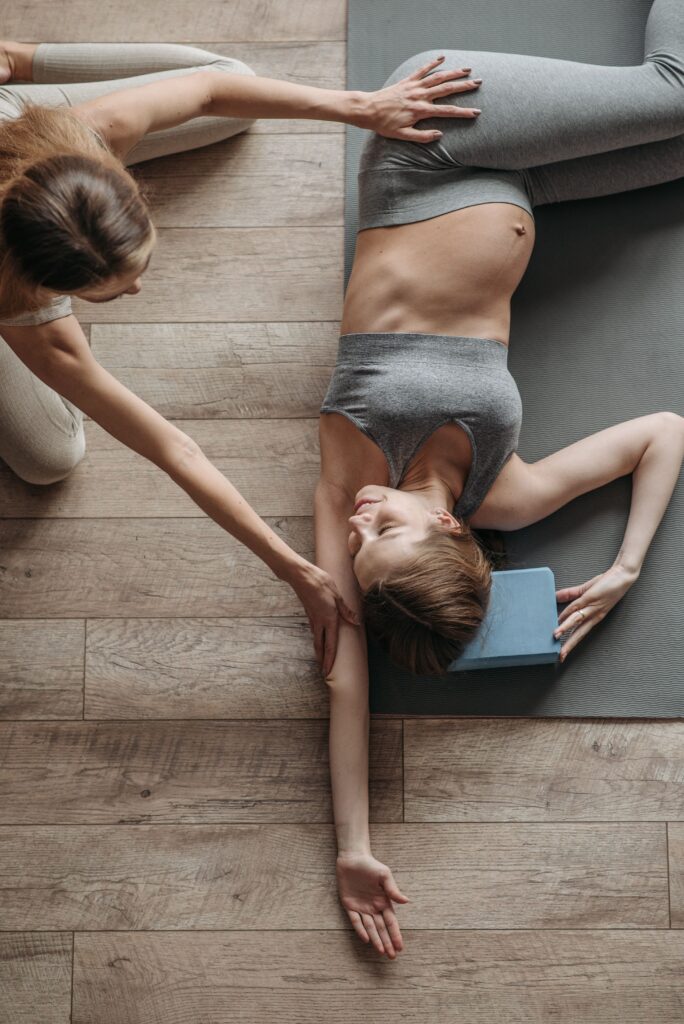
Side-Lying Leg Movements
Side-lying exercises can provide a gentle way to move the hips and legs without requiring strenuous activity.
A person can lie comfortably on the side with appropriate support, keep the body aligned, and slowly lift the upper leg before lowering it again.
A pillow can be used for comfort and support where appropriate.
The movement should remain controlled, and the exercise should be stopped if lying in that position causes discomfort.
Because pregnancy affects each person differently, side-lying exercises should be adapted according to comfort and any advice received from a healthcare professional.
Gentle Prenatal Stretching
Stretching can help maintain flexibility and reduce the feeling of stiffness that may come from sitting or remaining in one position for too long.
Pregnancy-friendly stretching should be gentle and should never be forced.
Comfortable movements may include slow shoulder stretches, gentle calf stretches, and mild hip or upper-back stretches.
Avoid bouncing during a stretch and do not push a joint beyond its comfortable range.
Hormonal changes during pregnancy can affect joint stability, so a stretch that once felt easy may feel different during pregnancy.
The purpose of stretching is comfortable mobility, not achieving maximum flexibility.
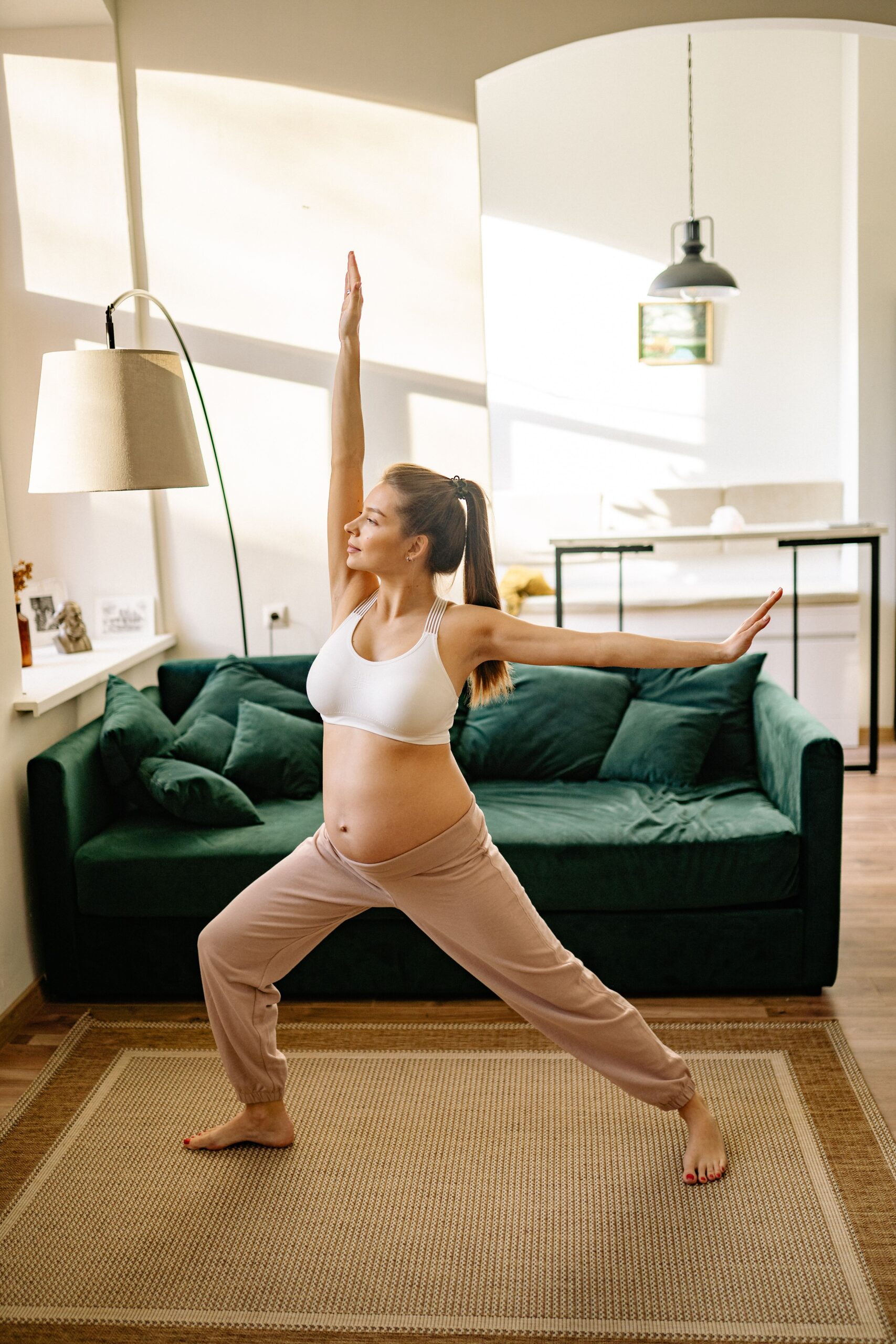
Pregnancy-Friendly Yoga at Home
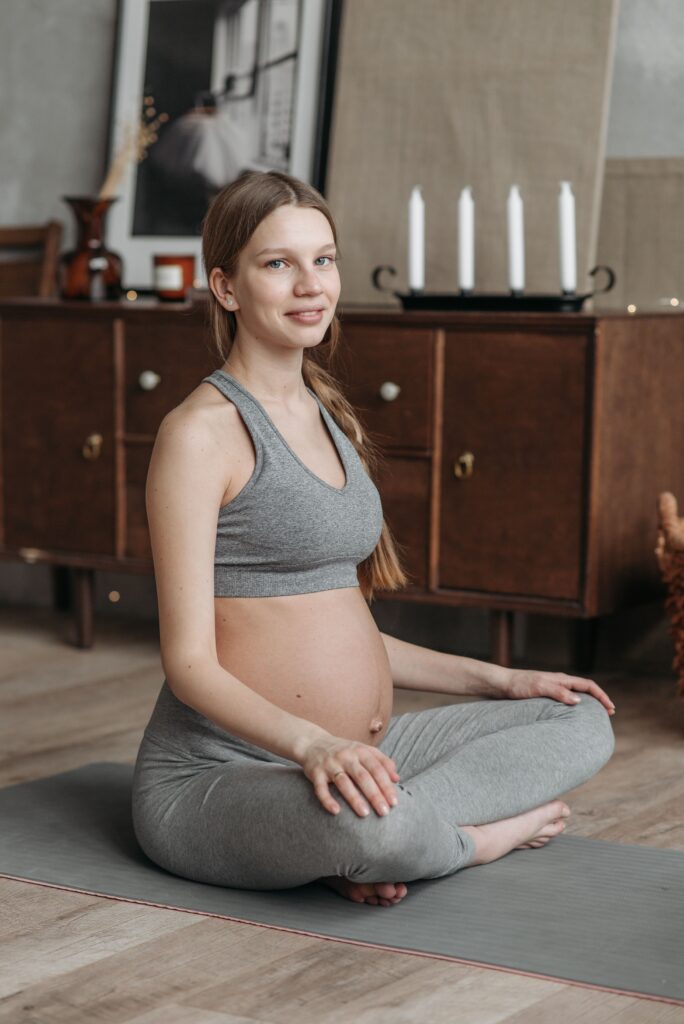
Modified prenatal yoga can combine gentle movement, stretching, breathing, and relaxation.
At home, it can be performed using a comfortable surface and enough space to move safely.
However, not every yoga position is appropriate during pregnancy.
Positions that involve lying flat on the back for prolonged periods, strong abdominal pressure, difficult balance, or a high risk of falling may need to be avoided or modified.
Heated forms of exercise such as hot yoga are also not appropriate during pregnancy because overheating can be harmful.
Choosing pregnancy-specific movements and avoiding positions that cause discomfort can make yoga a calmer and more manageable form of activity.
Gentle Upper-Body Exercises
Pregnancy exercise does not have to focus only on the legs.
Gentle upper-body movements can help maintain strength for everyday tasks such as carrying light household items, reaching, and changing positions.
Simple movements such as controlled arm raises or light resistance exercises may be appropriate for some pregnant people.
If weights are used, they should be manageable and should not require straining or holding the breath.
A person who did not regularly use weights before pregnancy does not need to begin a demanding strength-training routine simply because pregnancy has started.
Gradual, comfortable movement is generally more practical than suddenly increasing exercise intensity.
Chair-Based Exercises
A sturdy chair can make home exercise easier for people who want additional support.
Seated movements can include gentle ankle circles, controlled leg extensions, shoulder rolls, and comfortable arm movements.
Chair-based exercises may be especially useful on days when standing for long periods feels tiring.
They can also be combined with short walking sessions to create a balanced routine.
The chair should be stable and placed on a surface where it is unlikely to slide.
Exercises should remain slow and controlled, with regular breathing throughout.
Breathing and Relaxation Exercises
Breathing exercises are not a substitute for aerobic activity, but they can be a useful part of a gentle home routine.
Slow, comfortable breathing can encourage relaxation and help a person become more aware of how the body feels during movement.
A simple practice is to sit comfortably, relax the shoulders, breathe in gently, and breathe out slowly without forcing the breath.
Try to keep your breathing steady and relaxed instead of deliberately holding your breath.
Relaxation exercises can be particularly useful after physical activity when the body is returning to a resting state.
How Much Exercise Is Appropriate?
For healthy pregnant women without medical restrictions, the general recommendation is at least 150 minutes of moderate-intensity aerobic activity each week, preferably spread across several days.
This could mean approximately 30 minutes on five days, although the activity does not have to happen in one continuous session.
A person can divide exercise into shorter periods based on energy, schedule, and comfort.
Someone who is beginning from a low activity level can build up gradually rather than immediately trying to reach the full target.
The amount and intensity should be individualized, particularly when pregnancy symptoms or medical conditions affect physical ability.
https://www.nhs.uk/pregnancy/keeping-well/exercise/?utm_source=chatgpt.com
Use the Talk Test
The talk test can be a simple way to judge whether aerobic activity is becoming too intense.
During moderate activity, a person should generally be able to speak in sentences even though breathing is faster than during complete rest.
If talking becomes very difficult because of breathlessness, the activity may be too demanding.
This is not a perfect medical measurement, but it can provide a practical way to avoid pushing too hard during a home workout.
The focus should remain on comfortable, sustainable movement rather than trying to exercise as intensely as possible.
Stay Hydrated
Drinking enough fluids is an important part of staying comfortable during physical activity.
Pregnancy already increases the body’s need for careful hydration, and exercise can increase fluid loss through sweating.
Keep water nearby during a home workout and drink regularly according to thirst and healthcare guidance.
Exercise in a comfortable, well-ventilated environment rather than an excessively hot room.
Overheating can make exercise harder and may cause symptoms such as weakness, dizziness, or nausea.
If these symptoms occur, stop exercising, move to a cooler area, and seek medical advice if they are severe or do not improve.
Wear Comfortable Clothing and Supportive Footwear
Comfortable clothing can make movement easier during pregnancy.
Choose clothing that allows the abdomen and body to move without unnecessary restriction.
Supportive footwear is particularly useful for standing exercises and indoor walking because pregnancy can change balance and posture.
A safe exercise area is equally important.
Remove objects that could cause trips, keep the floor clear, and avoid exercising near slippery surfaces.
These simple adjustments can make home workouts safer without requiring expensive equipment.
Exercises to Avoid During Pregnancy
Not every physical activity is suitable during pregnancy.
Activities involving a significant risk of falling, physical contact, abdominal trauma, or extreme environmental conditions may need to be avoided.
Examples include activities such as downhill skiing, horseback riding, scuba diving, and certain contact sports.
Hot yoga and hot Pilates should also be avoided because of the risk associated with excessive heat.
Activities that require lying flat on the back for extended periods should generally be modified after the first trimester.
The safest exercise choices depend on the individual, so a healthcare professional should be consulted when there is uncertainty about a particular activity.
https://www.acog.org/womens-health/faqs/exercise-during-pregnancy?utm_source=chatgpt.com
Listen to Your Body
Pregnancy can change from one day to another, meaning that an exercise routine that feels comfortable one day may feel tiring on another.
Listening to the body’s signals is therefore essential.
Feeling mildly challenged during moderate exercise can be normal, but sharp pain, significant dizziness, unusual weakness, bleeding, fluid leakage, chest pain, painful contractions, or severe shortness of breath should not be ignored.
If a concerning symptom occurs, stop exercising and contact a healthcare professional promptly.
Exercise during pregnancy should support health rather than become something that requires ignoring warning signs.
When to Ask a Doctor Before Exercising
Although moderate physical activity is considered safe for many healthy pregnancies, some people need individualized medical advice before exercising.
This is especially important when there are pregnancy complications, certain heart or lung conditions, bleeding, concerns about preterm labor, or other medical issues that may affect activity recommendations.
A healthcare provider who knows the pregnancy history can help determine which activities are appropriate and whether modifications are necessary.
Pregnancy is not the right time to assume that a general exercise routine will be suitable for everyone.
Individual medical guidance should always take priority over a generic workout plan.
A Simple Home Exercise Routine
A gentle home routine can be organized without expensive equipment.
For example, a person might begin with five minutes of slow walking and comfortable shoulder movements, continue with ten to fifteen minutes of moderate indoor walking, and then add a few minutes of pregnancy-friendly strength exercises such as supported squats and standing leg movements.
The session can finish with gentle stretching and relaxed breathing.
This type of routine can be adjusted according to energy and comfort, and it does not need to be completed every day.
The key is to develop a sustainable pattern of movement rather than treating exercise as a test of endurance.
https://www.cdc.gov/physical-activity/features/pregnancy.html?utm_source=chatgpt.com
Exercise During Different Stages of Pregnancy
The body changes throughout pregnancy, so exercise often needs to change as well.
During the earlier months, some people may be able to maintain activities they already performed before pregnancy, although nausea, tiredness, or other symptoms may require adjustments.
As pregnancy progresses, the growing abdomen can affect balance, posture, and comfort, making lower-impact activities and additional support more useful.
During the later months, shorter sessions may feel more manageable than long workouts.
There is no requirement to perform the same exercises throughout pregnancy.
Adapting movement to the body’s changing needs is a normal and sensible part of staying active.
Make Exercise Part of Your Daily Routine
Exercise does not always need to look like a formal workout.
Walking while doing safe household activities, taking short movement breaks after sitting, performing gentle stretches, and completing brief exercise sessions throughout the day can all contribute to an active lifestyle.
Breaking activity into smaller periods can be particularly helpful when fatigue makes longer sessions difficult.
The CDC notes that physical activity can be divided into smaller amounts throughout the week rather than completed all at once.
Building movement into ordinary routines can therefore make staying active feel less demanding.
The Importance of Rest
Rest is an important part of pregnancy wellness and should not be viewed as the opposite of being active.
Pregnancy requires significant physical changes, and tiredness can vary considerably.
Taking rest days or shortening a workout when energy is low can be appropriate.
Good exercise habits include both movement and recovery.
A person should not feel pressured to exercise through exhaustion simply to reach a weekly number.
If persistent fatigue, unusual weakness, or other concerning symptoms make normal activity difficult, discussing them with a healthcare professional is appropriate.
Final Thoughts
Pregnancy exercises at home can provide a practical way to remain active without requiring a gym or complicated equipment.
Gentle walking, modified strength exercises, pelvic floor work, comfortable stretching, chair exercises, and pregnancy-friendly yoga can all be considered as part of an individualized routine when the pregnancy is healthy and a healthcare professional has not advised against physical activity.
The general goal for healthy pregnant women is around 150 minutes of moderate aerobic activity each week, but the routine should be adjusted according to fitness level, pregnancy stage, comfort, and medical guidance.
Most importantly, pregnancy exercise should be approached as a way to support well-being rather than as a challenge to push the body beyond its limits.
With sensible modifications, adequate hydration, appropriate rest, and attention to warning signs, gentle movement can be a valuable part of a healthy pregnancy routine.