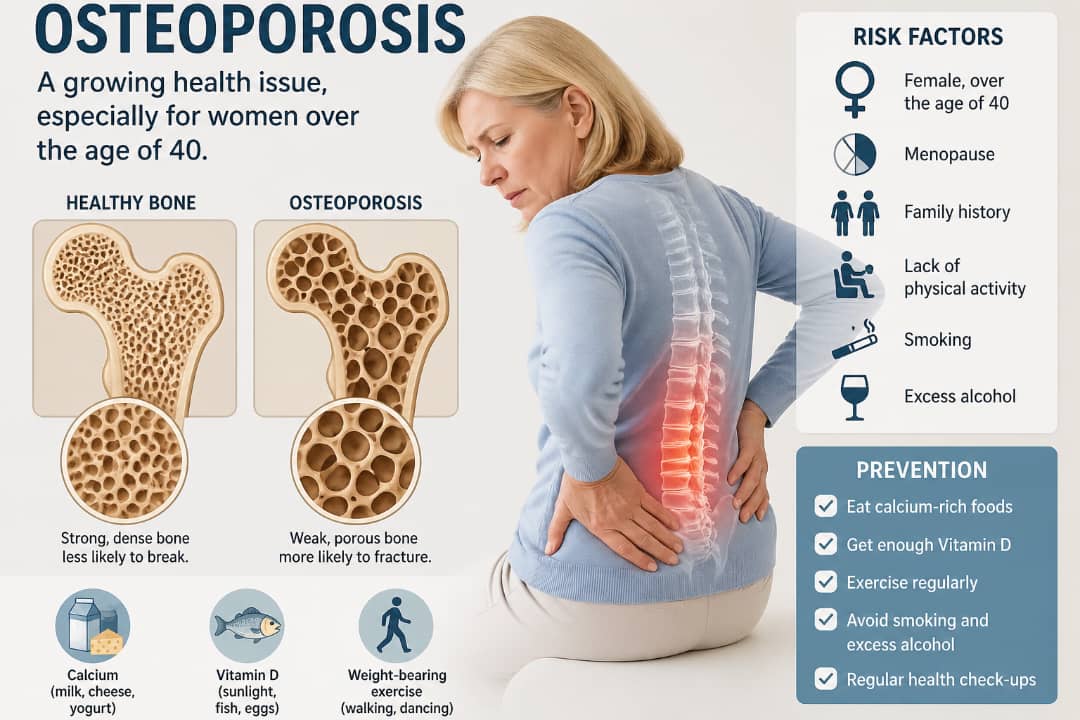
Osteoporosis is a growing health issue, especially for women over the age of 40.
As the body ages, changes in hormones—particularly a decrease in estrogen—can significantly affect bone strength. This condition often develops without any noticeable signs until a fracture happens.
FFor many women, becoming aware of osteoporosis early can make a big difference.
With the right knowledge, lifestyle changes, and proper care, it’s possible to protect bone health and keep living an active life.
What is Osteoporosis?
Understanding Bone Loss
Osteoporosis is a condition where bones become weak and are more likely to break.
Bones are living tissue that is constantly broken down and rebuilt. However, as we age, the balance between these processes changes.
Why It Matters
When the body loses bone faster than it can build it back, the bones become less dense.
This makes them more fragile and increases the chance of fractures, especially in the hips, spine, and wrists.
Why Women Over 40 Are at Higher Risk: The Role of Estrogen
Estrogen is a hormone that helps keep bones strong.
As women approach menopause, estrogen levels start to drop.
Effects of Low Estrogen
- Faster bone loss
- Weaker bones
- Greater risk of fractures
Menopause and Bone Health. After menopause, the rate of bone loss can increase significantly.
That’s why women over 40 need to pay extra attention to their bone health.
Signs and Symptoms of Osteoporosis: Early Stage: Silent Disease
In the early stages, osteoporosis often has no symptoms.
Many women don’t know they have the condition until a bone breaks.
Advanced Symptoms
As the condition gets worse, symptoms may include:
- Chronic back pain
- Gradual loss of height
- Curved or bent posture
- Bones that break easily, even from a minor fall
Risk Factors to Be Aware Of: Lifestyle Factors
- Poor diet with low calcium and vitamin D
- Lack of exercise
- Smoking
- Drinking too much alcohol
Medical and Genetic Factors
- Family history of osteoporosis
- Long-term use of certain medications (like corticosteroids)
- Being underweight
How to Prevent Osteoporosis
- Nutrition for Strong Bones
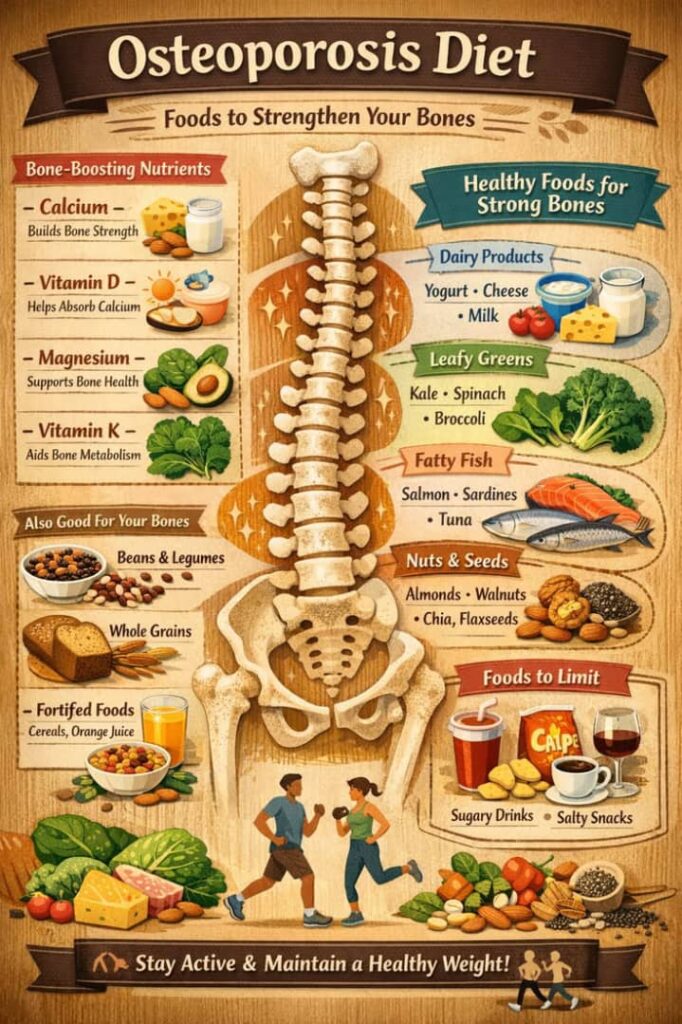
- Calcium-Rich Foods
Calcium is essential for strong bones.
Include:
- Milk, cheese, and yogurt
- Leafy green vegetables like spinach and broccoli
- Foods that are fortified with calcium
Vitamin D Intake
Vitamin D helps the body absorb calcium.
Sources include:
- Sunlight
- Fatty fish like salmon and sardines
- Eggs
Physical Activity
Weight-Bearing Exercises
Exercises that involve working against gravity help strengthen bones:
- Walking
- Jogging
- Dancing
- Strength Training
Lifting light weights helps improve bone density and build muscle.
Healthy Lifestyle Habits, Sun Exposure
Spending 10 to 20 minutes in the sun each day helps the body make vitamin D.
Avoid Harmful Habits
- Stop smoking
- Limit alcohol use
- Avoid a sedentary lifestyle
Diagnosis of Osteoporosis
Bone Density Testing
Doctors use a **DEXA scan** to measure bone density. This test helps determine:
- Bone strength
- Risk of fractures
- Whether treatment is needed
Treatment Options
Medications
Doctors may prescribe medications that:
- Slow down bone loss
- Help increase bone density: Supplements
- Calcium supplements
- Vitamin D supplements
Lifestyle Changes
Treatment is most effective when combined with:
- A healthy diet
- Regular exercise
- Strategies to prevent falls
Practical Tips for Women Over 40
Daily Habits That Make a Difference
- Eat meals that are rich in calcium and vitamin D
- Stay active every day
- Get regular health check-ups
- Keep a healthy weight
Fall Prevention at Home
- Make sure floors are clear of obstacles
- Use proper lighting
- Wear shoes that offer good support
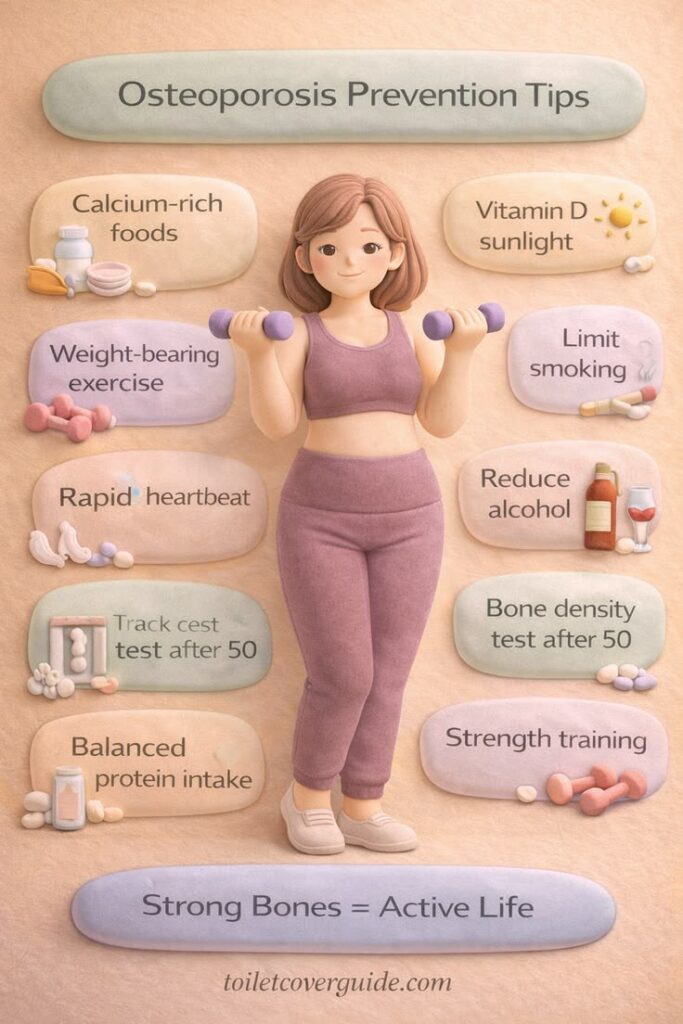
Osteoporosis is a serious but preventable condition that affects many women over 40. T
The drop in estrogen levels plays a major role in weakening bones, but early awareness and simple lifestyle changes can make a big difference.
By focusing on proper nutrition, regular physical activity, and regular medical care, women can protect their bone health and reduce the risk of fractures.
Taking action today can lead to a stronger, healthier future.
The Prediabetes Warning Sign Most People Ignore: A Powerful Early Warning You Should Never Miss